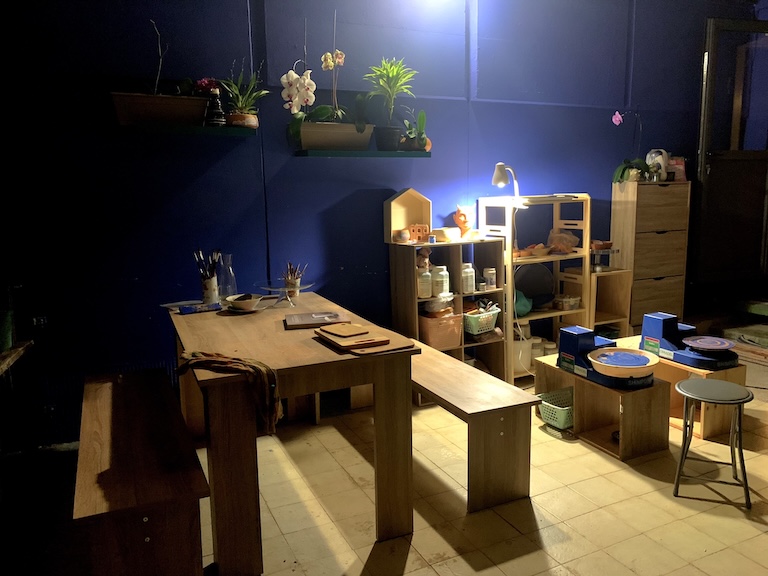
This is Part 2 of the heartfelt story of one of Atoly’s customers, who reinvented her life after forty by building her own ceramics studio. If you missed the beginning of her journey, you can read Part 1 here.
The Nerves of a First Lesson
I remember my very first student vividly. She was a young woman dressed in black overalls. That first lesson was incredibly stressful for me. I was terrified she would ask a question I couldn’t answer. I worried I wouldn’t be able to correct her mistakes. And probably a hundred other fears I can no longer recall.
I had no idea if she had enjoyed the lesson. But the very next day, she booked not a single class, but a four-lesson package. I was overjoyed. In that moment, I realized — I could do this.
Why I Stopped Sharing My Phone Number
Soon more bookings started to come in, but so did phone calls. And that’s when I regretted putting my phone number online. Alongside endless spam calls, there were people ringing without even knowing what they wanted to ask.
I quickly learned that a contact form on the website works far better. With a form, people explain their request upfront, and I don’t have to coax information out of them. Without it, some people just call to chat or expect you to convince them of something they haven’t even decided on. Others ask where you buy your materials, even though they have no interest in your classes.
My advice from this experience? Never post your phone number online.
Working Under the Heat
Running classes on my small terrace was not without challenges. With only a roof and two side walls, the heat quickly became unbearable. On Réunion Island, by October and November, the sun grows merciless.
I couldn’t afford to build new walls or invest in an expensive cooling system. So I improvised. I bought a small fan, tied a plastic bag filled with ice to it, and positioned it to constantly cool my student. It was the only solution I could afford.
Starting out in any business, I believe it’s essential to find quick, inexpensive solutions. At the time, I was scared it would take me months to recover my investment in tools and equipment. In reality, I managed to do so in just four or five weeks — and I was already making a profit.
Do you like this story?
Subscribe to our newsletter to be the first to know when the next part of this story is published — and to get practical tips for starting your own creative journey.
We'll never share your email with anyone else.
Skimping on Equipment, Gaining a Garden
Those first months were tough. I had no teaching experience, no real background in ceramics, and my studio was extremely modest. To reach it, students had to walk through our home — which I obsessively cleaned, terrified of any oversight.
I didn’t even have a proper sink in the studio. Later, I managed to buy a second-hand freestanding washbasin, which I connected to a garden hose. It wasn’t glamorous, but it gave me the water access every ceramics studio needs.
The funny thing? That crude system had an unexpected upside. The wastewater flowed directly into the ground, watering the small garden surrounding the studio. Plants grew lush, and seeds long dormant in the soil sprouted into life. My students were delighted by the greenery.
That’s when I realized something important: you don’t always need expensive or prestigious things. Sometimes, working with what you already have — and even turning imperfections into strengths — can create more charm than perfection ever could.
A Second Wheel, a New Formula
As more clients arrived, some began asking if they could come in pairs. I knew I had to grow, because the world wouldn’t wait for me. After running the numbers on my savings and income, I realized I could afford to buy a second pottery wheel.
This allowed me to expand my offer. Not only did I teach structured lessons, but I also created a format for people who simply wanted to have fun and try pottery together as a pair.
It was a hit! Until then, I had assumed that everyone sitting at the wheel secretly vowed not to stop until they could throw a proper vase. The truth was entirely different. Many people came for the joy of the experience itself.
Looking back, I see that my lack of experience in running a studio turned out to be an advantage. Without a rigid vision, I was flexible. That freedom let me invent new class formats — and grow my sales.
Conclusion
These first months taught me that every challenge can become an opportunity. From stressful first lessons, to improvising with fans and garden hoses, to realizing students don’t always want perfection — each step shaped my studio.
What began as doubt slowly transformed into confidence, creativity, and growth. And it all started with a single student booking her second lesson.
This is only the beginning of the journey. Stay tuned for the next chapter.